The engagement reinforced UMP’s commitment to working with government, business, traditional leadership and communities to strengthen institutional capacity and support regional development.
UMP Vice-Chancellor and Principal, Professor Thenjiwe Meyiwa, emphasised that local government is the sphere where citizens experience the impact of governance most directly, particularly through access to essential services such as water, road maintenance and waste collection.
She highlighted the importance of investing in leaders and professionals with the knowledge, judgement, and practical skills to respond to increasingly complex service delivery challenges.
“Effective institutions are fundamental to building capable communities and ensuring that public resources are used responsibly,” said Professor Meyiwa.
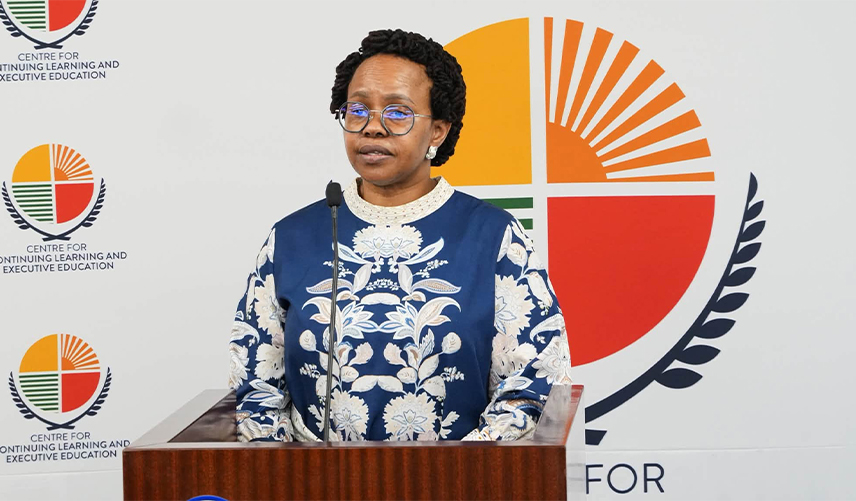 Professor Meyiwa mentioned that effective institutions are fundamental to building capable communities and ensuring that public resources are used responsibly.
UMP established the centre for strategic positioning to respond to specialised, practical learning opportunities that enable professionals to strengthen their competencies without necessarily undertaking lengthy formal qualifications.
Its approach is focused on short learning programmes and executive education in areas such as public finance, governance and leadership, with programmes intended to bridge the gap between academic knowledge and the practical demands faced by municipalities, traditional councils and other institutions.
Addressing the Challenges Facing South African Municipalities
Dean of the Faculty of Economics, Development and Business Sciences, Professor Kediboni Phako, highlighted the need to strengthen municipal financial management, technical expertise and institutional capacity.
“Capacity building is an essential instrument for transforming local government. We need to use our skills, capacities and networks to support the transformation of the local government sector through partnerships and learning,” said Professor Phako.
Professor Mpilo Ngubane of the Institute of Local Government Management expressed support for UMP’s executive education initiative, adding that continuing education provides leaders with opportunities to reflect on their practices, challenge assumptions and adapt to changing institutional demands.
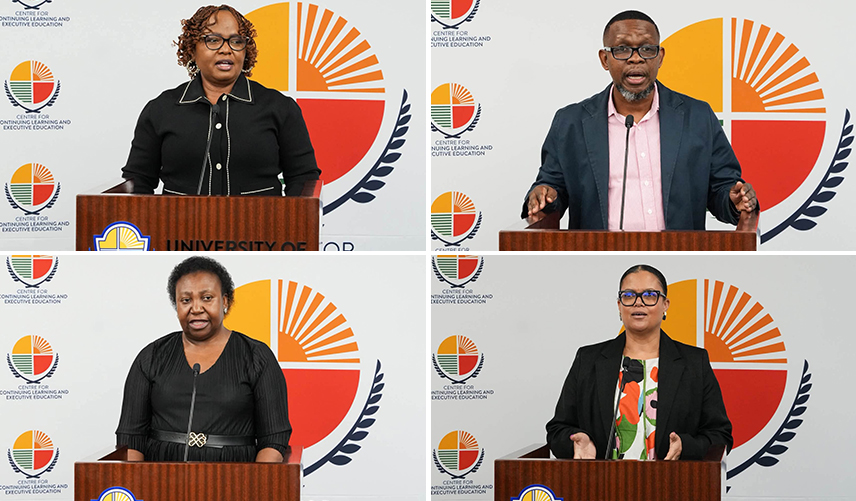 Speakers emphasised strengthening capacity building initiatives, which will be beneficial for community development.
Capacity Building Initiatives
Deputy Director-General at the Department of Cooperative Governance, Human Settlements and Traditional Affairs (COGHSTA), Ms Linkie Mohlala, raised concerns about the gap between completing training programmes and applying the knowledge gained in the workplace.
“Capacity-building initiatives must reach the appropriate decision-makers and result in tangible improvements in governance, accountability and service delivery,” she added, challenging leaders to move beyond administrative responsibilities and become ethical custodians of public resources and community development.
Ms Mohlala also highlighted the need for executive leaders to apply what they learn within their respective municipalities and districts, including through the District Development Model, to support coordinated planning and development.
By investing in leadership, practical skills and collaborative partnerships, UMP seeks to contribute to capable institutions that can serve communities effectively, ethically and sustainably.
Story by Cleopatra Makhaga. Pictures JB Creative Cinema. Copyright ©️ UMP.