Building a just, functional and prosperous South Africa requires leaders and citizens who act with integrity, accountability and a strong sense of responsibility, said Ms Nompumelelo Mkhatshwa, former Chairperson of Parliament’s Portfolio Committee on Higher Education, Science and Innovation.
Speaking during the 2026 Archbishop Thabo Makgoba Development Trust (ATMDT) Annual Lecture on Ethical and Moral Leadership, recently held at UMP Mbombela Campus, Ms Mkhatshwa challenged the tendency to attribute South Africa’s moral and institutional challenges solely to political leadership.
She argued that leaders emerge from society and that meaningful change therefore requires individuals and communities to examine their own values and conduct.
“The current ethical decay is not merely a political issue; it is a societal issue,” she said, raising the question of whether a moral society produces moral leaders, or whether leaders must first cultivate a moral culture within society.
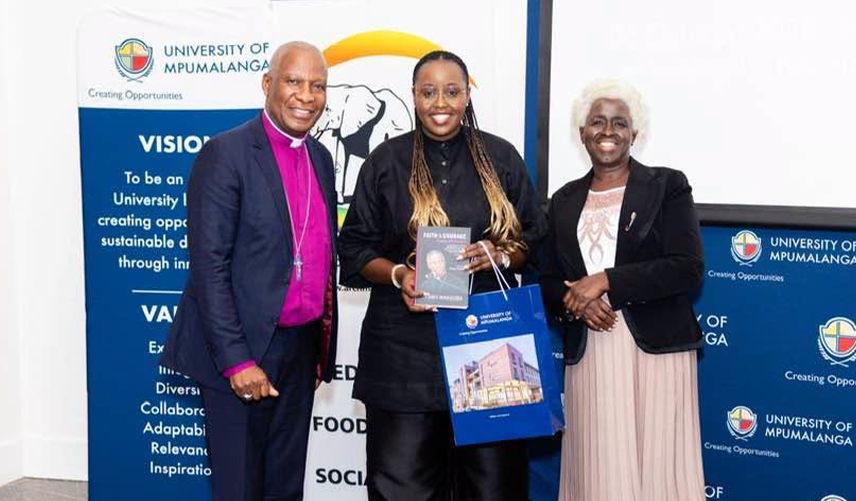 The lecture was delivered by Ms Nompumelelo Mkhatshwa.
For Ms Mkhatshwa, responsibility for the country’s future cannot rest entirely with the State. Families, churches, universities, communities and individuals all have a role to play in rebuilding trust, accountability and a sense of duty towards the common good.
Her address reflected on missions undertaken by previous generations, including the 1956 Women’s March, the 1976 youth uprising, the adoption of South Africa’s democratic Constitution in 1996 and the 2016 student movement for access to education.
While acknowledging these important milestones, she challenged the current generation to consider its own contribution to the country’s development, citing: “Each generation must discover and fulfil its mission, or betray it.”
From Liberation to Responsible Governance
Ms Mkhatshwa noted that young South Africans must move beyond nostalgia for previous liberation struggles and focus on building institutions capable of sustaining the democratic gains achieved over decades.
She distinguished between fighting for liberation and governing in a liberated society, arguing that the latter requires institution-building, accountability and responsible decision-making.
“The liberation struggle and governing liberation require different disciplines,” she said.
This distinction also raised questions about the gap that can exist between personal beliefs and professional conduct. She questioned how individuals can publicly profess strong moral and religious values while engaging in dishonest or abusive practices in their workplaces.
She referred to examples of public officials demanding bribes for basic government services and individuals who participate in ethics programmes while failing to address fundamental challenges affecting communities.
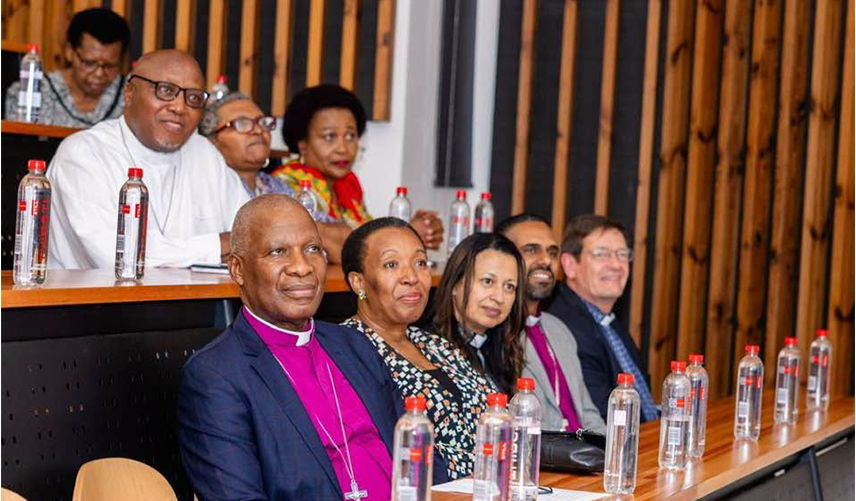 The lecture challenged the current generation to consider its own contribution to the country’s development.
According to Ms Mkhatshwa, South Africa’s challenge is not necessarily a shortage of laws, policies or skilled professionals. Rather, it is the failure to apply knowledge, skills and institutional systems in ways that serve the public interest.
She also highlighted the importance of accountability in the public service, calling for the Batho Pele principles to be reflected in citizens’ everyday experiences rather than remaining statements displayed in government offices.
Poor service delivery, including citizens being told that “the system is down” when seeking essential services, was cited as an example of how institutional failures can undermine public trust and dignity.
Creating Space for Young Professionals
The discussion also turned to young professionals and the challenges they can face when entering the workplace. Ms Mkhatshwa cautioned against environments characterised by gatekeeping, ego-driven management and the misuse of “protocol” to prevent young people from contributing new ideas.
She challenged the commonly used narrative of a “skills mismatch”, arguing that many young professionals possess valuable skills that are instead underutilised or suppressed by rigid institutional environments.
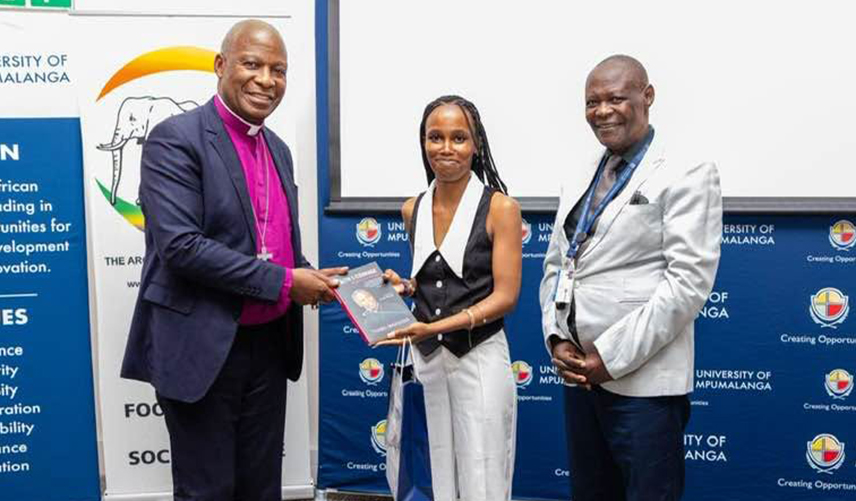 Ms Lerato Mahlangu was announced as the winner of the student essay competition.
She encouraged students, young professionals, law students and alumni to create support networks for individuals who demonstrate integrity and dare to challenge practices that undermine institutions.
Young people, she said, should embrace moral courage and resist the temptation to conform to unethical practices simply because they have become normalised within certain environments.
The Constitution and the Freedom Charter, she said, should remain important guides for navigating questions of responsibility, justice and conduct in South Africa’s democratic era.
The lecture concluded with a call for the conversation to extend beyond the lecture hall and become embedded in the everyday practices of individuals, institutions and communities.
The annual lecture forms part of the Archbishop Thabo Makgoba Development Trust’s broader commitment to promoting dialogue around morality, accountability and responsible citizenship, while supporting initiatives that contribute to social development.
As part of this lecture, an essay competition allowed students to engage with the themes explored during the event. Ms Lerato Mahlangu was announced as this year’s winner for her essay on morality, ethical leadership and the development of a responsible society.
Story by Cleopatra Makhaga. Pictures by JB Creative Cinema. Copyright ©️ UMP.