Led by the Food and Agriculture Organization of the United Nations (FAO), World Food Day raises awareness of hunger and promotes action to secure the future of food, people and the planet. The 2026 global theme, Innovate Today. Nourish Tomorrow, highlighted the role of data, technology and artificial intelligence in building productive, resilient and inclusive food systems that make nutritious food more affordable and accessible.
Hosted by the School of Agriculture and Natural Sciences, under the theme: Harnessing Indigenous Food Systems through Innovation for Food Security, Nutrition, and Climate Resilience, the UMP event highlighted the value of indigenous food systems and underutilised crops in strengthening household food security, improving nutrition and helping communities adapt to climate change.
Professor Funso Kutu, Head of the School of Agricultural Sciences at UMP, emphasised the role of science and technology in mitigating the effects of climate change on food production. He noted that, despite South Africa's position as a major food producer, food insecurity remains a challenge, particularly in rural areas.
He highlighted the need for agricultural innovation, including scientific tools and modern practices to preserve nutrient-rich indigenous foods and address rising hunger.
“Addressing food insecurity requires robust public policies to tackle systemic malnutrition and poverty. Partnerships with industry experts and guest lecturers are also essential to ensure that university curricula remain relevant to the needs of industry,” he said.
Addressing Food Access and Waste
Discussions also addressed the effects of climate change on food production and its links to poverty, hunger, health and well-being. Mr Mcolisi Ngcamphalala discussed the contrast between South Africa's food production capacity and the persistent challenges of food insecurity, waste and unequal access to nutritious food.
“While availability is not the issue in South Africa, accessibility remains a critical failure due to systemic factors and economic inequality; there is limited access to nutritious food. For instance, in places such as Emalahleni, fresh produce is often unavailable within walking distance, costing locals to rely on less nutritious options or pay high transport costs to reach retailers," he said.
Mr Ngcamphalala also raised concerns about market concentration and food waste, noting that major retailers control more than 70% of the market. He argued that pricing and product standards could prioritise profit over nutrition, while cosmetic requirements and failures in cold-chain management contribute to substantial food waste.
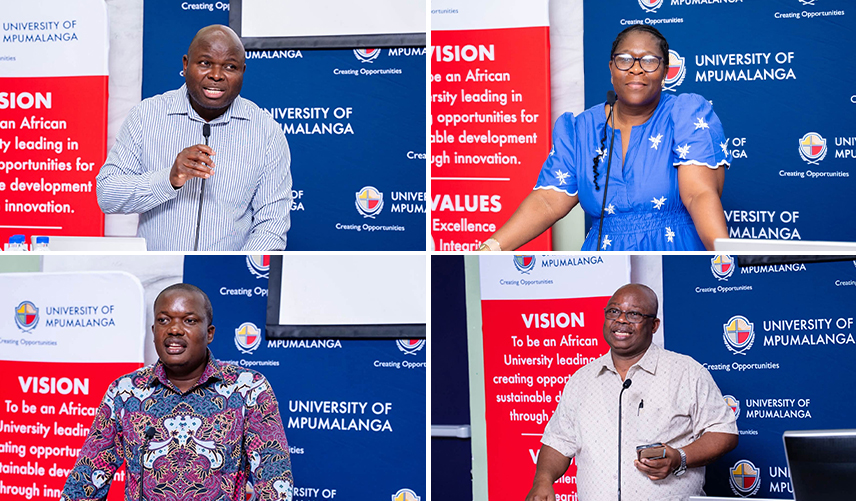 UMP World Food Day event discussed issues of hunger, wastage and sustainable food solutions.
AI and Smart Farming Innovations
Associate Lecturer at UMP, Mr Armstrong Makome, explored how artificial intelligence (AI), remote sensing and indigenous knowledge could be integrated to strengthen food security and climate resilience in South African agriculture.
"The use of satellite data, including Sentinel-2 imagery, can monitor crop conditions across seasons. By combining weather, soil and farm data, AI-driven models can identify unusual patterns associated with crop stress and drought," explained Mr Makome.
His view is that the potential of smart-farming advisory simulators and automated irrigation systems that use crop, weather and soil data to provide early warnings of dry spells and improve water management.
“Current AI tools often focus on major commercial crops, leaving indigenous food systems underserved. To bridge this gap, researchers must treat farmers as co-designers during the requirement-gathering phase."
Director for National Extension Reform in the Department of Agriculture, Land Reform and Rural Development, Mr Makala Jeffrey Ngaka, discussed the contribution of indigenous knowledge systems (IKS) to food security, climate resilience and local food systems, highlighting the importance of registering indigenous knowledge to protect it from misuse while recognising its roots in community experience and cultural identity.
Mr Ngaka further emphasised the need for a multifaceted approach to food security that combines collaborative partnerships, digital innovation and research to promote inclusive economic growth.
Proposed Solutions to Food Insecurity
Discussions underscored the importance of combining indigenous knowledge with innovation to support sustainable food production and build more resilient communities. Participants considered ways to improve access to nutritious food, strengthen local food systems and bridge the gap between research and practical solutions.
The event also explored how indigenous food systems, scientific research and technological innovation can strengthen food security, improve nutrition and build resilience to climate change.
Story by Cleopatra Makhaga. Pictures by JB Creative Cinema. Copyright © UMP.