Held under the theme Indigenous Languages for Social, Political and Economic Inclusion, the inaugural event brought together academics, policymakers, students and the community to examine how indigenous languages can strengthen teaching and learning, research, community engagement and public policy.
The name Asicocisane – Asixoxeni, meaning "Let us engage one another", reflects the University's commitment to creating spaces where different knowledge systems, cultures and perspectives can inform scholarly discussion.
Welcoming guests, Deputy Vice-Chancellor: Research, Innovation and Internationalisation, Professor Aldo Stroebel, said the discussion series reinforces UMP's commitment to scholarship and public engagement.
"This initiative symbolises the balance between research excellence and public engagement. It shows that meaningful change starts with conversations that build understanding, inclusion, innovation, and sustainable development. Through these engagements we strengthen scholarship while serving the public good,” he said.
Professor Meyiwa highlighted that the launch reflected the University's commitment to recognising language as both a human right and a catalyst for change.
"This gathering is not simply about launching a programme. It is about affirming our conviction that language is a fundamental right. Language has the power to build, to heal and to transform, but it can also destroy. We must choose to use language in ways that affirm the dignity of every person."
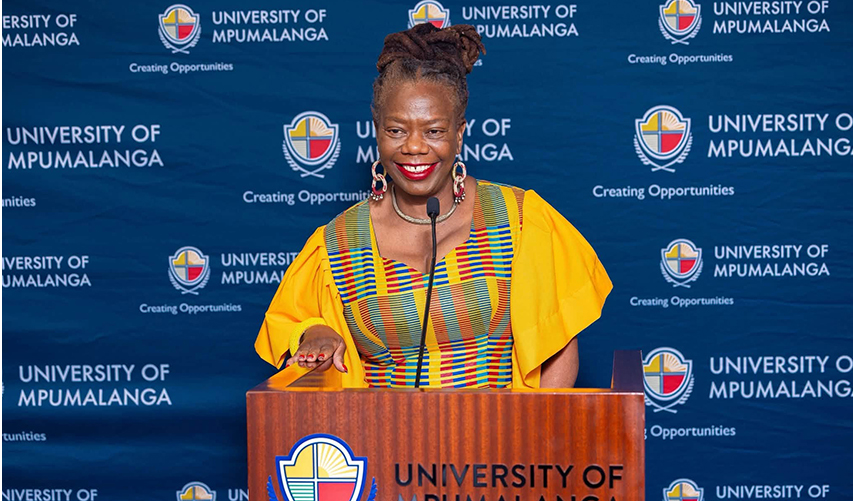 The launch reflected the University's commitment to recognising language as a catalyst for change.
She encouraged higher education institutions to strengthen the role of indigenous languages in scholarship, research and innovation, and to ensure that research findings are accessible to the communities they serve.
"Our languages carry the wisdom of our ancestors, our identity and our humanity. Through dialogue, research and scholarship we must reclaim ownership of our languages and use them to build a different world,” Professor Meyiwa added, encouraging scholars to embrace difficult conversations.
"Let us ask difficult questions, not to divide us, but to deepen understanding, generate hope and inspire transformation. The future we envision is one where ideas, courage and identity flow together through our languages."
Panel explores language, justice and economic participation
The launch was followed by an inaugural roundtable discussion, during which academics from different disciplines explored the contribution of indigenous languages to contemporary social, political and economic issues.
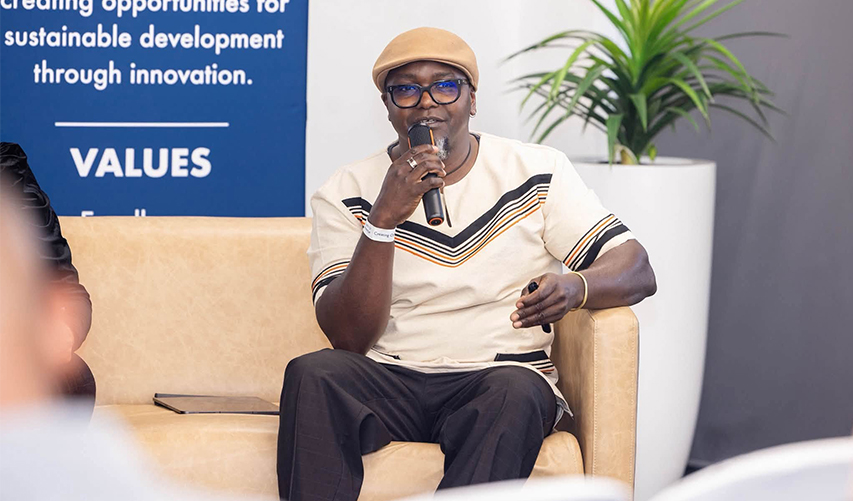 Academics from different disciplines explored the contribution of indigenous languages to contemporary social, political and economic issues.
Senior Lecturer in Cultural Heritage Studies at UMP, Dr Sibongile Masuku, highlighted storytelling as an important part of scholarship and interdisciplinary collaboration, saying: “Our goal is to document these engagements and ultimately preserve them through scholarship that future generations can learn from."
Dr Thembelihle Makanya, UMP Senior Lecturer and Programme Leader in Social Work, added that language is home. It is memory. It is identity.
“Every language carries its own worldview and emotional expressions that cannot always be translated. If we continue teaching students in English only, while expecting them to serve communities whose lived experiences are expressed through indigenous languages, we deny those communities the quality, ethical and socially just services they deserve."
She said greater use of indigenous languages in higher education would strengthen communication between professionals and the communities they serve.
Senior Lecturer in Sociology and Programme Coordinator for Gender Studies at UMP, Dr Nonzwakazi Maqubela, examined the relationship between indigenous languages, gender, and the justice system, and noted that language barriers often prevent survivors from fully accessing it.
Encouraging participants to recognise indigenous languages as economic resources, UMP Senior Lecturer and Acting Programme Leader in Entrepreneurship and Business Management, Dr Mazanai Musara said, “Africa is home to more than 3 000 languages, yet only a few dominate business and commerce.
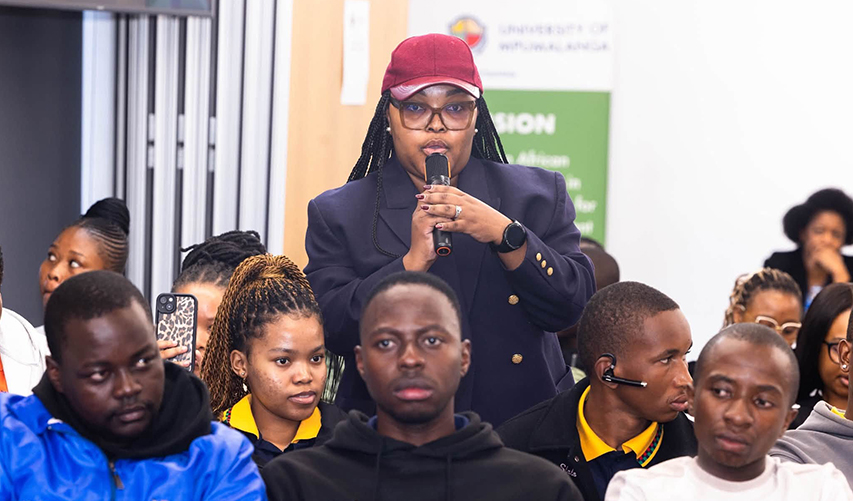 The discussion highlighted the role of indigenous languages in advancing knowledge production, social justice, economic participation and inclusive governance.
Language is a form of capital. It creates opportunities for employment, entrepreneurship and social mobility. We should begin viewing our indigenous languages as marketable resources capable of generating value through technology, translation, tourism and digital innovation."
Closing the discussion, Senior Lecturer and Programme Leader in Media, Communication and Culture at UMP, Dr Sam Nzioki, called on scholars to expand the role of indigenous languages in knowledge production.
"Indigenous languages should not simply translate existing concepts. They should create new concepts that deepen our understanding of the African experience. Our scholarship must ask difficult questions and develop language that reflects our realities instead of relying solely on inherited Western terminology."
The discussion highlighted the role of indigenous languages in advancing knowledge production, social justice, economic participation and inclusive governance. Through the ASICOCISANE – ASIXOXENI Roundtable Discussion Series, UMP aims to create an ongoing platform for dialogue on issues that matter to its communities and to the broader higher education sector.
Story by Cleopatra Makhaga. Pictures by JB Creative Cinema. Copyright © UMP.